

Discover the history, achievements, statistics and curiosities of the FIFA U-20 World Cup, where the stars of world football are born.
ALL ABOUT THE OFC CHAMPIONS LEAGUE CHAMPIONSHIP
The OFC Champions League may not sound as prestigious as UEFA or CONMEBOL, but in Oceania, it's the pinnacle of club football. This tournament brings together the champions of the region's national leagues, with the winner qualifying for the Club World Cup. Since its inception in 1987, it has evolved, seen clubs like Auckland City dominate, and nurtured unexpected talent. Here's everything you need to know: its history, statistics, achievements, quirky facts, and why this tournament gains more visibility every year.


Beginning and evolution of the Oceania Championship
The OFC Champions League, formerly known as the Oceania Club Championship, had its first edition in 1987. At that time, only two teams participated: Adelaide City of Australia and University of Fiji, with the Australians winning the title. Then, the tournament had a long hiatus and did not return until 1999, with more teams and a more structured organization.
With Australia's departure from the OFC in 2006 (to join the AFC), New Zealand became the dominant force in the competition. Auckland City has been the most successful club, winning the tournament more than 10 times, making it a symbol of Oceanic football. Format changes and professionalization. In its early editions, the tournament was very small. Today, however, it features a preliminary phase, group stage, and knockout rounds. The champions of leagues such as New Caledonia, Papua New Guinea, Solomon Islands, Fiji, Samoa, Tahiti, among others, participate.
1987: First edition with only 2 teams.
1999: Officially returns with more countries.
2007: The current name “OFC Champions League” is established.
2013: The more robust group stage is introduced.
2024: New format with semi-professional clubs is planned.
Although it does not have the fame of others The Confederations Cup is a showcase for local talent and serves as a direct qualifier for the FIFA Club World Cup. It's the dream of many players from small islands looking to make their mark on the world stage.

Dominant Clubs, Achievements, and Current Structure
Auckland City of New Zealand is the undisputed giant of the tournament. With more than 10 titles, they even achieved a historic participation in the 2014 Club World Cup, where they reached third place, beating teams from much stronger leagues. Their dominance has been such that it has forced other countries to improve their structures to compete.
Other prominent teams
Hekari United (Papua New Guinea): Champion in 2010, the first non-New Zealand team to achieve this.
Team Wellington (New Zealand): A strong rival of Auckland, they won in 2018.
AS Tefana (Tahiti): They have reached the final stages several times.
Lae City (Papua New Guinea): Dominant in their league, they participate frequently.
AS Magenta (New Caledonia): Historic and consistent.
The current system includes a preliminary round between the smaller countries, followed by a group stage divided by geographical zones. Then, quarterfinals, semifinals, and a single final played at a neutral or rotating venue.
The champion receives direct entry to the Club World Cup, in addition to a prize money which, although modest compared to other confederations, means a lot to the clubs in the region. Many players also use the OFC Champions League as a platform to move to Asian or Australian leagues.
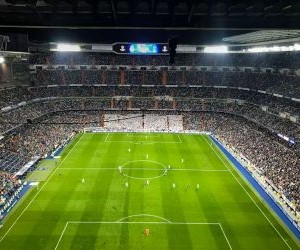
Interesting facts and moments that made history
This tournament has unique stories, due to the exotic nature of its venues, the love for football in unusual places, and the extreme conditions under which many matches are played. From boat trips to pitches surrounded by jungle, the OFC Champions League has a special flavor.
Did you know…?
Auckland City has won more OFC Champions League titles than Real Madrid in Europe.
In some editions, players worked as teachers or police officers during the week and played on the weekend.
The referees are often from the same islands and travel between countries on propeller planes.
The 2010 final was played in Port Moresby, in front of more than 15,000 people, a record for Oceania.
In In 2020, the pandemic canceled the tournament with the semifinals set, without declaring a champion. One of the most iconic moments was in 2014, when Auckland City beat ES Sétif of Algeria and then lost on penalties to San Lorenzo in the Club World Cup semifinals. Nobody expected so much from an amateur team from New Zealand. Furthermore, this championship has become a cultural event on many islands. Entire communities get involved: from those who cook for the team to the local bands that liven up the matches. It's more than football: it's a social event.
YOU MAY ALSO BE INTERESTED