FC SEOUL – SOUTH KOREA: HISTORY, ACHIEVEMENTS AND LEGENDS
FC Seoul is one of South Korea's most iconic clubs, renowned for its vibrant history, technical style of play, and passionate fans. From its founding in the 1980s to its establishment as one of the giants of Asian football, the capital city club has combined success, spectacle, and local pride. This look back at its evolution, the titles that cemented its legacy, the managers who made a lasting impact, and the players who transformed FC Seoul into a symbol of South Korean football.


The Origins of FC Seoul
FC Seoul was founded in 1983 as Lucky-Goldstar Hwangso, owned by the Lucky-Goldstar Corporation (later LG). It was one of the founding clubs of the K League, South Korea's professional league. Although it began its journey in Seoul, a restructuring of national football in the 1990s forced the club to relocate to Anyang, where it played as the Anyang LG Cheetahs. However, its heart always belonged to the capital.
The Return to the Capital and a New Beginning
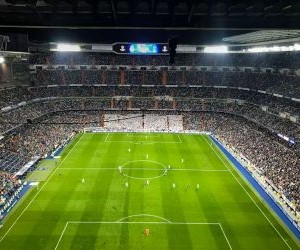
In 2004, after years of management and negotiations, the club officially returned to Seoul and adopted its current name: FC Seoul. With the return came a renewed impetus, a massive fan base, and an ambitious project that aimed to turn it into a continental giant. Their new home, the imposing Seoul World Cup Stadium, became the epicenter of Korean football. 1983: Founded as Lucky-Goldstar Hwangso. 1990: First South Korean league title. 2004: Return to Seoul as FC Seoul. 2010: Golden year with league title and record attendance. Identity, colors, and fans. The club's colors—red and black—represent strength and passion. Their mascot, a defiant tiger, symbolizes the team's competitive spirit. The "Suhoshin" supporters, which means "Guardian" in Korean, have gained fame for their energy and choreography in the stands of the Seoul World Cup Stadium, one of the most imposing venues in Asia.

Achievements and Golden Eras
FC Seoul is not only one of the most popular clubs in South Korea, but also one of the most successful. Throughout its history, it has won multiple national titles and had outstanding performances in continental tournaments, leaving its mark in the AFC Champions League.
National Titles
The club has won the K League six times (1990, 2000, 2010, 2012, 2016, and 2020), in addition to lifting the FA Cup and several League Cups.
Every championship has its own story, but none as special as the 2010 season, when FC Seoul, managed by coach Hwangbo Kwan, dominated the league and broke attendance records at the World Cup stadium.6 national league titles.
2 FA Cups (1998 and 2015).
2 League Cups (2006 and 2010).
AFC Champions League runner-up in 2013.
Magical nights in Asia
Choi Yong-soo – Idol as a player and strategist. Under his leadership, the team won the league in 2012 and reached the Asian Champions League final.
Hwangbo Kwan – Architect of the 2010 title and promoter of modern attacking football.
Lee Eul-yong – Iconic figure at the club who took over as interim manager in 2018, respected for his connection with the fans.
Ernesto Valverde (European rumors and links) – Although he never signed, the club has shown interest in managers with European experience, reflecting its international ambition.

Star Players and Idols of FC Seoul
FC Seoul has been the cradle of great Korean and international footballers. Its youth academy and ability to attract foreign talent have made it a breeding ground for stars for the national team and for European clubs.
National Legends
Among the names that made history is Park Chu-young, a versatile forward who shone both at FC Seoul and Arsenal in England. His return to the club in 2015 was received as an act of love for the colors. Another key name is Ki Sung-yueng, an elegant and cerebral midfielder who came up through the club's youth academy before finding success at Celtic and in the Premier League.
Park Chu-young – An attacking icon for the club, its all-time leading scorer.
Ki Sung-yueng – The heart of the midfield and a key player for the national team.
Lee Chung-yong – A talented winger who played in the Premier League before returning to the club.
Adilson dos Santos – A naturalized Brazilian captain, a symbol of leadership and commitment.
The foreign players who made their mark
Dejan Damjanović, the Montenegrin striker, became true idols. Dejan scored over 150 goals for the club, leading the attack for almost a decade. Mauro Óbolo and Osmar Barba also stood out, the latter a Spanish defender who even captained the team, demonstrating the foreign players' commitment to the club's project. Their blend of local and international talent made FC Seoul one of the most complete and competitive squads in Asia, always with aspirations of lifting the continental Champions League trophy. The present and future of the club: Today, FC Seoul remains a benchmark in South Korea. Despite recent ups and downs, the club maintains a solid structure and a loyal fan base. Its current focus is on young national talent and a modern, attacking football philosophy. Furthermore, it continues to strengthen its global brand with international tours and partnerships with European clubs. The dream lives on: to regain dominance in the K League and lift the AFC Champions League trophy for the first time, the trophy that has eluded them for so long. Meanwhile, the fans continue to fill the stadium, proudly chanting “Seoul, Seoul, Seoul!” every weekend. With history, titles, and an identity forged by the passion of the capital, FC Seoul is much more than a club: it is a symbol of modern Korean football, where tradition and ambition merge to create legend.