
Will Antoine Griezmann make it to the 2026 World Cup with France? We analyze statistics, current events, and his role with Les Bleus on their way to the most important tournament on the planet.
Home
»
World Cup 2026
»
CAN BRAZIL WIN THE WORLD CUP? FULL ANALYSIS
We explore whether the Brazilian national team has what it takes to win another World Cup
Brazil is widely considered one of the favorites to win the title every time a FIFA World Cup is held. With five world titles to their name (1958, 1962, 1970, 1994, and 2002), the Brazilian national team holds the record for championships in this competition. However, since their last victory in 2002, the Seleção has faced difficulties in achieving footballing glory again. Given this context, can Brazil win the World Cup again?
One of Brazil's main strengths is its constant production of footballing talent. The current generation is full of stars who play for the biggest clubs in Europe. Players like Vinícius Júnior, Rodrygo, Casemiro, Marquinhos, Alisson Becker, and Éder Militão have proven to be pillars of their respective squads.
Furthermore, top-level coaches like Tite and now his successor have implemented modern strategies with a solid defensive structure complemented by creative attacking play.The Brazilian game has evolved from a predominantly offensive and artistic style to a more balanced combination of ball control, tactics, and pressing. This tactical evolution has been well-received by analysts, as it responds to current trends in international football and strengthens the team's competitiveness.Another point in its favor is Brazil's football infrastructure. The country boasts world-class academies, excellent facilities, and talent scouting from a young age, guaranteeing a constant stream of elite players. Football is part of Brazil's DNA, and this national commitment continues to strengthen its national team.Recent successes in tournaments like the 2019 Copa América, combined with strong performances in the South American World Cup Qualifiers, position Brazil as a serious contender. While competition at the World Cup is fierce, Brazil perennially has the capacity to go far, provided it maintains a disciplined balance between individual talent and collective solidarity.In short, Brazil has the resources, both tactical and human, to aspire to the world title once again. The key question will be whether it can overcome the psychological and tactical barriers that have held it back in its recent appearances.
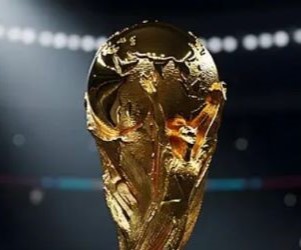
Despite its history and talent, Brazil also faces significant challenges that could hinder its aspirations of winning the next World Cup. The first of these is emotional pressure. As a global football superpower, any result other than first place is perceived as a national failure. This expectation can negatively impact performance, especially among young players.Another notable challenge is the increasing parity among national teams. European teams like France, England, and Germany have developed equally talented generations, accompanied by sophisticated tactical systems. Meanwhile, South American teams like Argentina and Uruguay have proven to be tough opponents, even gaining the upper hand tactically in recent matches against Brazil.Technical management also represents a decisive factor. Following Tite's departure after the 2022 Qatar World Cup, the transition to the new coaching staff requires both tactical and emotional adjustment. The lack of continuity could affect the team's cohesion in a competition as brief and intense as a World Cup.Equally present is the concern about injuries. Several key players for Brazil play in leagues with high physical intensity and tight schedules, which increases the possibility of not arriving at the tournament in optimal condition. The squad's depth can mitigate this risk, but some positions still lack replacements with sufficient international experience.Additionally, the tactical approach of playing with attacking lineups—while exciting—can lead to vulnerabilities, especially against teams with quick transitions. The balance between attack and defense will be one of the key parameters for Brazil's success.Finally, the political and administrative climate within the Brazilian Football Confederation (CBF) could also have an indirect effect on the team. Any instability in leadership can affect planning, logistics, and the emotional climate surrounding the coaching staff and players.These challenges are significant, but not insurmountable. If Brazil can face them with collective intelligence and an effective tactical response, it can strengthen its chances of becoming world champion again.
When analyzing the probability of Brazil winning the next World Cup, it's important to consider both technical and emotional factors, as well as historical statistics. Major betting sites and advanced statistical models consistently place Brazil among the favorites, typically in the top three teams most likely to lift the trophy.The metrics used consider variables such as the FIFA ranking, performance in recent matches, the level of competition in qualifying, the fitness of key players, and historical experience in advanced knockout rounds. In many of these aspects, Brazil presents positive indicators: it regularly occupies a high position in the FIFA ranking, has consistently won its qualifying groups, and its stars often shine in international club competitions.The data also reveals that modern champion teams share certain common elements: a balanced squad, technical leadership with a clear tactical vision, good pressure management, depth on the bench, and international experience. Brazil meets many of these criteria, although it needs to improve in others, particularly its ability to respond in disadvantageous situations.Performance in the knockout stages will be crucial. In recent editions, Brazil has been eliminated in the quarterfinals, a barrier that has been difficult to overcome since 2002. This is partly due to a lack of clinical finishing in key matches and an over-reliance on individual creativity against tactically disciplined opponents.However, the development of talents like Vinícius Júnior, who is reaching his footballing maturity, and the defensive consolidation led by Marquinhos and Alisson, suggest that this group can have an effective combination of youth and experience. Furthermore, rigorous planning and conscious management of the emotional environment can make all the difference in critical phases of the tournament.
Without a more detailed analysis of direct rivals prior to the tournament, everything suggests that Brazil has a realistic chance of becoming champion if it manages to maintain its focus, overcome recent limitations, and capitalize on its structural strengths. It is not a guarantee, but it is a fully plausible possibility.
In short, Brazil is among the strongest contenders for the title. Tradition, emerging talent, and a well-established structure make the Brazilian team a serious contender to claim a sixth star.
YOU MAY ALSO BE INTERESTED