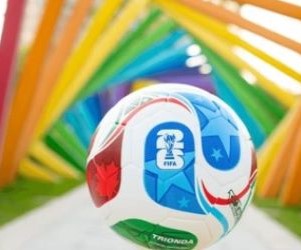

CAN CURAÇAO WIN THE WORLD CUP? FULL ANALYSIS
We explored whether the Curacao national team has the capacity to win the World Cup, considering its history, talent, structure, and global competitive level.


History and Evolution of the Curaçao National Team
The Curaçao national football team represents this Caribbean island in competitions organized by FIFA and Concacaf. Formerly part of the Netherlands Antilles, Curaçao gained its own identity after its dissolution in 2010. Since then, it has shown remarkable competitive growth in the region, gaining particular prominence from 2017 onwards with coaches like Patrick Kluivert and players trained in European academies.
In tournaments such as the Concacaf Nations League and the Gold Cup, Curaçao has surprised with solid performances.
In 2017 and 2019, they qualified for the Gold Cup, even reaching the quarterfinals in 2019. Although they have not yet participated in a World Cup, they have been present in qualifying rounds with tangible progress in both infrastructure and available talent.The team has leveraged its historical connection with the Netherlands to recruit players of Curaçaoan origin, either born or developed in European leagues. This approach has raised the squad's technical level, facilitating its competitive growth within the Caribbean environment, which has traditionally had limited resources and visibility on the international football scene.Current status of the national team and FIFA rankingIn the most recent FIFA ranking, Curaçao is in the middle positions within CONCACAF—well below regional powerhouses like Mexico, the United States, and Costa Rica—and even further behind top global teams like Brazil, France, and England. However, their ranking has improved compared to previous decades, thanks to more sophisticated technical strategies and a federation that demonstrates serious ambitions within the continental context.The Curaçao Football Federation has invested in training centers, international scouting, and long-term development. It has also made a point of regularly competing against top-level teams, prioritizing experience and competition over immediate results. While these efforts are commendable, there is still a lack of consolidation of youth projects, squad depth, and experience in high-pressure situations such as final stages or decisive qualifying rounds.Future Potential in Global CompetitionsThinking about a World Cup victory may seem premature from a realistic perspective. However, Curaçao shows potential to gradually integrate into the later qualifying stages and, eventually, reach its first World Cup. It is crucial to consolidate structural foundations, maintain ties with international talent, and continue investing in professionalizing sports.In the long term, similar projects in other regions—such as Iceland in Europe or Qatar in Asia—show that small countries can surprise us if the right conditions are in place in terms of planning, talent, and institutional support. For Curaçao, this means sustained strengthening of its local leagues, a greater number of players in top foreign leagues, and a national team that maintains tactical and technical continuity.
Structural Differences with Elite Teams
Despite its progress, Curaçao faces significant differences compared to teams that regularly reach the final stages of World Cups. First, its training infrastructure and domestic competitions are still basic compared to countries like Germany or Spain. The domestic league lacks pace, technical depth, and international exposure—key elements in the development of elite players.
Second, there is a considerable disadvantage in terms of talent depth. The strongest teams typically have successive generations of players who play important roles at top-level clubs. While Curaçao has fielded players with international experience, it still lacks a sufficiently deep pool to compete at the same level or to respond to injuries, suspensions, or individual dips in form.
Demographic and Economic Limitations
Population size and financial resources also play a role.
With approximately 150,000 inhabitants, Curaçao has a natural limitation in its talent pool. Furthermore, its federation lacks access to the budgets that other countries have for youth programs, friendly tours, or federation development. This scarcity impacts the ability to professionalize all levels of Curaçaoan football, from coaches to medical staff and logistical structures.The country's economy also limits the availability and sustainability of sponsorships. Although in recent years it has received institutional support from the Netherlands and agreements with foreign companies, it is still far from the large sports promotion machines of countries like France or Italy. This economic gap translates into fewer international friendlies, less competitive experience, and a reduced capacity to maintain a long-term sports project in the face of crises or significant defeats.Psychological and Cultural FactorsPsychological and cultural factors are no less relevant. The media and social pressure faced by contenders forces players to develop mental skills that can only be cultivated in top-level competitions. Teams like Argentina or England forge their mettle through intensive cycles of physical and mental training, under the constant expectation of victory.Curaçao, not yet having entered that global sphere, has not collectively built these tools. This could take its toll in critical matches such as decisive qualifying rounds or close matches against higher-ranked teams. Overcoming this obstacle requires not only time, but also continuous exposure to major competitions.The World Cup is not just a technical competition. It is also a matter of collective resilience, solid institutional management, and a high-performance culture—factors that are still being consolidated in Curaçao.
Objective Assessment of Their Chances
From a strictly competitive standpoint, the odds of Curaçao winning a World Cup in the short term are very low. No country in the Caribbean region has ever qualified for the final stages of a World Cup, and only Jamaica, in 1998, has ever reached the group stage. Curaçao hasn't even made its debut in the world's premier football tournament. Therefore, talking about a World Cup title involves overcoming not one, but multiple sporting, structural, and cultural hurdles.
Does that mean it's impossible? Not necessarily. Football has proven to be unpredictable in certain contexts. Teams like South Korea in 2002 or Morocco in 2022 have defied expectations by reaching the semifinals. But those successes were built on decades of structural preparation, consistent planning, and solid grassroots support systems.
For Curaçao to follow a similar path, it would need several factors to align: sustained funding, excellent recruitment of foreign talent, a top-tier coaching staff, and a group committed for more than a generation.Comparative Advantages of Curaçao
Despite its limitations, Curaçao has some assets that can become strategic advantages. One of these is its connection with the Netherlands. This relationship allows it not only to recruit players with dual nationality trained in European academies but also to import modern technical methodologies and advanced analytical resources. The experience of European coaches can accelerate the professionalization process and adapt playing systems that are at the forefront of tactical innovation.
Furthermore, the low pressure surrounding Curaçao allows for more experimentation both on and off the field. It should not sacrifice long-term processes for immediate results. This window of opportunity can be used to strengthen its development foundations, prioritize quality over quantity, and develop strategies that other teams cannot pursue due to media demands or internal politics.Possible Timelines and Realistic ScenariosIn the immediate future (2026 or 2030), it is unlikely that Curaçao will compete for a World Cup title. A realistic goal would be to attempt to qualify for the World Cup as a first step, something that is already a possibility given the expansion of the format to 48 teams. Later on, consistently qualifying, reaching the Round of 16, and then the quarterfinals would be natural stages of development.The dream of winning a World Cup requires the convergence of many elements. For a small nation like Curaçao, this depends not only on individual talent but also on the ecosystem surrounding national football—from the federation to the smallest youth club—functioning effectively and sustainably for at least another decade or two. Only in this way can the foundations for high-caliber achievements be built.