

CAN SPAIN REACH THE QUARTER-FINALS OF THE EURO CUP?
We explore whether the Spanish national team has what it takes to reach the quarterfinals based on its current performance, squad, and rivals.


Currently, the Spanish national team boasts a group of talented youngsters and an experienced core that complement each other well. Under the guidance of manager Luis de la Fuente, the team has begun to display a fresh and renewed style, emphasizing passing, high pressing, and controlled possession. This approach remains true to the traditional identity of Spanish football but incorporates greater verticality and dynamism in attack.
Emerging figures such as Pedri González, Gavi, Nico Williams, and Alejandro Balde represent the new generation of footballers ready to compete at the highest level. Alongside them, players with more international experience—such as Álvaro Morata, Dani Carvajal, and Rodri Hernández—provide the necessary experience to handle high-pressure situations in knockout stages.
Recent statistical analysis reveals that Spain has increased its attacking efficiency and maintained a stable defensive performance.
In the qualifiers for major tournaments, La Roja has delivered resounding victories and maintained a solid goal difference, which favors their path to the quarterfinals if they maintain this consistency.Furthermore, the bench has proven robust, with substitutes capable of maintaining or even raising the team's technical level. This squad depth can be decisive in longer tournaments, where injuries or suspensions could diminish the performance of teams with less quality rotation.Even so, doubts persist in certain positions, especially in defense and goalkeeper, where the lack of a clear starter with high international recognition raises questions. Likewise, the ability to maintain tactical composure against tenacious teams will be key in determining whether Spain can advance to the quarterfinals.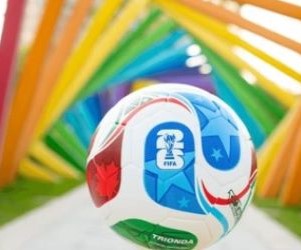
One of the most decisive factors in assessing whether Spain can reach the quarterfinals of a major competition is the composition of its group and the potential matchups. The draw and the tournament schedule can either benefit or hinder any team's chances, and Spain is no exception.
In recent European national team tournaments, Spain has shared a group with strong teams such as Germany, Italy, Croatia, and Poland. In Euro 2024, for example, depending on the assigned group, Spain could face high-level teams from the group stage, which complicates or raises the bar before the knockout rounds.
If Spain achieves a good position in its group, it could face a less historically significant opponent in the round of 16, increasing its probability of advancing to the quarterfinals.
However, the draw can produce surprises, and teams like Switzerland, Denmark, and Serbia have shown they can eliminate favorites in single-elimination matches.Another key factor is the team's form and cohesion throughout the tournament. Teams that arrive with good momentum and few injuries tend to perform more consistently. In this regard, physical preparation and the scheduling of pre-tournament friendly matches will play an essential role for Spain.Bookmakers and sports analysts are already showing divided opinions: while some consider Spain a strong contender for the semifinals, others point out that recent inconsistency and a lack of finishing in attack could hinder their aspirations. However, if they maintain their tactical identity, take advantage of their young talent, and manage key matches maturely, their chances of reaching at least the quarterfinals are solid.In conclusion, although the road ahead is not without obstacles, Spain possesses the tactical, technical, and human elements to reach the quarterfinals. Success, however, will depend on mental balance, team management, and clinical finishing in crucial moments.