

The 2026 World Cup will be a tech extravaganza: from smart stadiums to AI-assisted referees. We'll tell you about the innovations that will change the game.
WHAT INNOVATIONS IS FIFA BRINGING FOR REFEREES AT THE 2026 WORLD CUP?
The 2026 World Cup will not only be the biggest in terms of teams and venues, but also the most technologically advanced. And that will be reflected in the refereeing. FIFA has announced a series of innovations that will change how justice is dispensed on the pitch: from VAR 2.0 with artificial intelligence, to sensors in the balls and uniforms that detect fouls in real time. In this article, we explore what tools referees will have to make better decisions, avoid controversies, and make football fairer for everyone.


More accurate refereeing with VAR 2.0
Since its debut at Russia 2018, VAR has been a key, but not perfect, tool. By 2026, FIFA is preparing a much more agile version 2.0, with faster decisions and a smaller margin of error.
VAR with artificial intelligence
The big news will be the incorporation of artificial intelligence algorithms that will help video assistant referees detect key plays in real time: penalties, handballs, offsides, or unsportsmanlike conduct.
AI trained with more than 10,000 real plays
Automatic alerts when a possible infringement is detected
Analysis of angles and ball speed in milliseconds
Continuous learning system after each match
According to FIFA, this AI reduces the average VAR review time from 92 to 47 seconds per play. Almost half!
Clearer communication with the stadium
In addition, referees will now explain their decisions over the microphone, like in American football. This way, the fans in the stadium and at home will know why a controversial play was or wasn't penalized.
A giant step towards the transparency that fans have been clamoring for.

Technology in the uniform and the ball
In 2026, referees will have invisible but powerful allies: sensors and cutting-edge technology integrated into the ball, jerseys, and even their own watches.
Ball with contact sensor
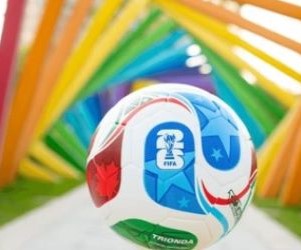
The official World Cup ball will have an internal motion sensor that registers every touch in real time, including who touched it first and if there was a handball. This helps VAR and the main referee make more accurate decisions.
More than 500 data points processed per second
Ability to detect imperceptible micro-touches
Direct coordination with the semi-automatic offside system
In Qatar 2022, this ball reduced arguments over handballs and throw-ins. In 2026, it will be even more precise and faster.
Sensors in uniforms
Some referees will wear clothing with sensors that detect their location and posture to improve their positioning on the field. In addition, assistant referees will wear haptic devices that vibrate when an offside is confirmed by technology.
This aims to prevent human errors due to poor positioning or blind spots in fast-paced plays.
Referee smartwatches
As in previous editions, referees will wear watches that vibrate when the ball completely crosses the goal line. This technology, known as "Goal-Line Technology," is now combined with pressure sensors in the ball to be 100% reliable. Goodbye to phantom goals: if the technology says it crossed the line, it's a goal. End of discussion.
Training, Analysis, and Faster Justice
But technology isn't just on the pitch. FIFA has also invested in referee training using virtual reality simulators, AI, and video analysis tools to improve decision-making under pressure.
VR Decision Simulators
Referees now train with virtual reality headsets that recreate real match situations from different angles. This way, they can practice how to react to a dubious penalty, a tactical foul, or a marginal offside.
More than 250 simulated scenarios per referee
Mental training for pressure and boos
Ability to replay plays from 360° angles
This type of training aims to improve consistency and reduce errors on the field.
Faster justice, less controversy
According to FIFA statistics, 133 Decisions reviewed by VAR throughout the tournament. In 2026, with new technologies, that number is expected to decrease, but with greater accuracy. Referees will also have access to a team of analysts in real time who can send tactical suggestions or recommendations on positioning and card management. All of this will be done through an internal channel without interrupting the game. The goal is clear: fewer mistakes, more fairness, and cleaner, more fluid football for everyone.
YOU MAY ALSO BE INTERESTED