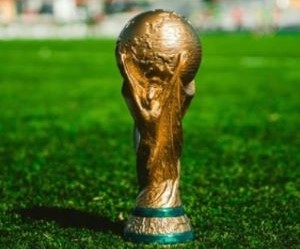

CAN GHANA WIN THE WORLD CUP?
Does Ghana have the potential to win the World Cup? We analyze their chances, history, and challenges in international football.


When considering Ghana's chances of winning a World Cup, it is essential to assess its current talent, sporting infrastructure, technical expertise, and consistency in the face of the global challenges of modern football.
Current Strengths
- Emerging Talent: Ghana has been a breeding ground for young players with great potential. Individuals such as Mohammed Kudus (West Ham), Kamaldeen Sulemana (Southampton), and Mohamed Salisu (AS Monaco) demonstrate technical quality and competitive ambition. These talents represent a new generation poised to shine on the global stage.
- International Experience: Many players on the national team play in top European leagues. This exposure provides a significant competitive advantage, both tactically and in terms of rigorous training.
- Established youth system: Schools like the Right to Dream Academy have proven to be effective breeding grounds, feeding both European clubs and the national team. This investment in development remains a structural advantage for the team's future.
- Passion and popular support: Football enjoys an almost religious status in Ghana. This translates into often unconditional support from the fans, who boost the team's morale during competitions.
Key weaknesses
- Lack of tactical depth: On many occasions, Ghana has lacked coaches with sufficient experience at the highest level. Although Otto Addo has shown promise, the lack of elite strategists remains a barrier.
- Internal Management Problems: The Ghana Football Association has faced scandals and administrative challenges that affect long-term planning and execution for the national team.
- Competitive Inconsistency: While capable of defeating superior teams on a favorable day, Ghana has demonstrated a lack of consistency against tough opponents in long-format competitions such as the World Cup.
- Limited Infrastructure: Compared to world powers, the development of sports infrastructure—stadiums, training centers, sports medicine—still requires significant improvement.
Although Ghana's strengths are clear in terms of talent and passion, structural and tactical aspects present limitations that must be addressed for them to have a realistic chance of becoming world champions.

To determine if Ghana can win a World Cup, it's necessary to analyze the medium- and long-term prospects. The future will depend on multiple factors, including the development of national talent, planning strategies, state investment, and performance in upcoming international competitions.
Youth with High Potential
One of the main reasons to believe in an optimistic future is the pool of rising talent. Young players like Ernest Nuamah, Ibrahim Osman, and Fatawu Issahaku have begun their careers in Europe, gaining playing time at competitive clubs. Early development in European academies allows them to acquire tactical discipline and rigorous sporting knowledge at the elite club level.
Furthermore, with more strategic monitoring of Ghanaians in the diaspora, many young players with dual nationality could choose to play for Ghana.
Recent cases like that of Tariq Lamptey, born in England, illustrate how incorporating talent from the diaspora can strengthen a team.Investment in African Football
At the continental level, Africa is beginning to invest more seriously in its national teams. FIFA and CAF have increased the number of African slots for the 48-team World Cup starting in 2026, which will increase the continent's presence in critical stages. In this context, Ghana could become a leader of the new African wave.Collaborative initiatives with European clubs, technical and scientific training programs in the sport, and the strengthening of local leagues are positive signs for the future competitiveness of African national teams, including Ghana.Increasingly Open Global CompetitionWhile the World Cup has traditionally been dominated by a select group of countries (Brazil, Germany, Italy, France, among others), modern football is becoming increasingly democratized. The growing technical and physical parity between teams is narrowing the gap. Examples like Morocco in the 2022 World Cup—reaching the semifinals—are tangible proof of how far an African team can go with preparation and cohesion.The next challenge will be structuring the team with a strategic vision. Ghana will need to include specialists in physical conditioning, data analysis, sports psychology, and team management. The key question will be: can Ghana professionalize its system enough to compete consistently against the major powers of Europe and South America?Given its gradual progress, wealth of young talent, and growing institutional support, Ghana has the potential to win a World Cup in the future. It won't be easy, but history has shown that African football dreams advance steadily. Ghana could be leading this new era sooner than expected.