

The draw for the 2026 World Cup will be held in Zurich, Switzerland, the headquarters of FIFA, where the groups for the most anticipated tournament in global football will be defined.
HOW WILL THE 2026 WORLD CUP DRAW BE HELD?
The 2026 World Cup will be a historic event: 48 teams, three host countries, and a new format that will change the course of global football. In this article, we explain clearly and entertainingly how the 2026 World Cup draw will work, what criteria will be used to determine the seeding pots, when it will be held, and what interesting facts you should know if you're passionate about football and statistics. Get ready to understand the behind-the-scenes workings of the event that will define the destiny of the world's footballing powers.


The New Format of the 2026 World Cup
The 2026 World Cup will mark a new era in football history. It will be the first with 48 teams, a number that breaks with the tradition of 32 teams that had been maintained since France 1998. This change seeks to broaden global representation, giving more space to continents such as Africa, Asia, and North America.
The United States, Mexico, and Canada will host the tournament, making it the first World Cup organized by three countries. In total, there will be 16 venues spread across the continent, with iconic cities like Los Angeles, Mexico City, and Toronto at the center of the action.
According to FIFA, the format will offer more matches (104 in total) and more excitement for fans. The draw will define 12 groups of 4 teams each. The top two teams from each group and the 8 best third-placed teams will advance to the round of 32, a further step before the round of 16. This adjustment aims to maintain competitiveness and avoid meaningless matches.
Total teams: 48
Matches to be played: 104
Tournament duration: 39 days
Number of groups: 12
New places for Africa and Asia: +4 and +4 respectively
This format has been designed to increase excitement and offer opportunities to countries that previously barely dreamed of reaching the World Cup. However, it has also generated debate: some fear that the quality of the tournament could be diluted. But one thing is for sure: there will be more stories, more goals, and more drama.

How the draw will be determined
The 2026 World Cup draw will be a spectacle in itself. It is expected to take place at the end of 2025, once all continental qualifiers have concluded. FIFA will use the world rankings as the basis for distributing the teams into four pots, ensuring that the strongest teams do not face each other from the outset.
Pot criteria
The pots will be structured according to the most recent FIFA rankings prior to the draw. Pot 1 will include the hosts (USA, Mexico, and Canada) along with the highest-ranked teams. The remaining teams will be arranged in descending order down to Pot 4. Each group will feature a mix of teams from different confederations, preventing two teams from the same region (except Europe) from being in the same group.
Pot 1: Hosts and top 9 ranked teams
Pot 2: Teams ranked 10th to 18th
Pot 3: Teams ranked 19th to 32nd
Pot 4: Teams ranked 33rd to 48th
The draw will be televised worldwide and will feature a Hollywood-style ceremony: lights, live music, and legendary former players Drawing the balls that will decide the fate of the nations. Among the usual guests expected are icons like Zidane, Ronaldo, and Carli Lloyd, to give it that global touch.
Predictions and possible groups
Although it is impossible to know exactly how the groups will end up, expert simulations already suggest possible "groups of death." Imagine a group with Brazil, Germany, Morocco, and Japan: a perfectly possible scenario under this new format. The likelihood of historic clashes increases.
Furthermore, analysts point out that the new system will allow emerging teams like Morocco, South Korea, and the United States to advance further. The statistics also predict more draws and penalty shootouts, adding even more drama to the tournament.
Possible upsets: Canada, Nigeria, Japan
Probability of European champions: 41%
Probability of South American champions: 38%
Most watched matches: Opening and Final
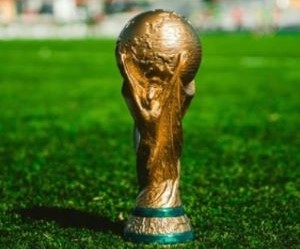
Interesting Facts and What to Expect
The World Cup draw is not just an administrative formality, but a football ritual full of superstitions, statistics, and unforgettable moments. For example, in the 2018 draw, FIFA used an algorithm to avoid "impossible groups" and ensure balance. By 2026, an even higher level of technology is expected, possibly with 3D simulations and augmented reality streaming.
Historical Curiosities
Brazil has never been drawn in a group with Germany in the initial phase.
Spain has debuted 5 times against American teams in World Cups.
Mexico has been a seeded team three times in its World Cup history.
In the 1994 draw, Pelé made a mistake when drawing a ball... and changed the order of the groups.
To In 2026, FIFA has promised a cinematic event, with visual effects showing the host cities and flags floating over an interactive map. Furthermore, the new format could change how "surprises" are perceived. Second-tier teams could sneak into the top 16, making the draw an even more unpredictable lottery. Fans around the world are already preparing their predictions, betting pools, and memes. Social media will be buzzing during the event, with each team instantly generating trends. According to FIFA data, interest in the 2026 World Cup could exceed 5 billion cumulative viewers, an absolute record. Mexican fans hope to see their team drawn into a manageable group, Canadians dream of advancing to the round of 16 for the first time, and Americans see the perfect opportunity to boost soccer domestically. Every ball drawn will be a story to tell, a dream beginning.
Expected fans at the draw: over 15,000 live
Broadcast planned: 180 countries
Social media: over 300 million interactions
So, when the day of the draw arrives, get your predictions ready, grab your favorite drink, and get your friends' WhatsApp group ready. Because one thing is for sure: the 2026 World Cup draw will be just as exciting as the tournament itself.
YOU MAY ALSO BE INTERESTED