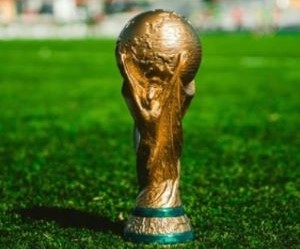

Yes, the 2026 World Cup will be a bonanza for sports betting: legal, global, and more technologically advanced than ever. Here's what it's all about.
WILL THERE BE MAJOR REFEREEING CONTROVERSIES IN FOOTBALL?
Refereeing decisions have always been part of the soul of football, but with VAR, the controversy has been transformed. Have errors decreased, or have they simply changed form? In this article, we explore recent statistics, epic moments of controversy, and why the debate never ends. Get ready for an in-depth analysis, with pitch-side flavor, passion from the stands, and plenty of interesting facts.


How do refereeing controversies arise?
Refereeing controversies in football are not a new phenomenon. Since the first organized tournaments, the figure of the referee has been the subject of praise, but above all, criticism. What is interesting is how these controversies arise not only from human error, but also from perceptions, emotions, and even narratives created by the media.
Human Error and Environmental Pressure
Referees must make decisions in tenths of a second, often with limited viewing angles and under pressure from players, coaches, and thousands of fans. According to a study by the University of Bath, referees are correct in 94% of their decisions, but that remaining 6% generates headlines, debates, and endless memes. When a refereeing error goes viral, its impact multiplies. Social media and sports programs magnify every questionable play. Even if the play was legal, public perception can label it as a "robbery." And so, a new controversy is born, sometimes based more on narrative than reality. Over 70% of viral social media controversies are gray area plays. 48% of fans believe their team has been "robbed" at least once a season. Only 12% of controversial plays receive official review. What is clear is that football is pure emotion, and any decision that changes the course of a match is amplified. Controversy is almost inevitable.

Did VAR solve or worsen the problem?
When VAR (Video Assistant Referee) was announced, many thought that refereeing controversies would be a thing of the past. But the reality is more complex. Although it has corrected clear errors and brought more fairness in certain cases, it has also added a new type of controversy: the technological one.
Surprising statistics
According to FIFA data, at the 2022 Qatar World Cup, VAR corrected 93 decisions that would have changed the score. That sounds like a resounding success, right?
But the same report reveals that the average review time was 74 seconds, and that 31% of players felt it "disrupts the flow of the game." Justice or dehumanization? For many fans, VAR has eliminated part of the folklore of football. That thrill of shouting a goal and celebrating without fear of it being disallowed is gone. Now we have to wait. And if VAR makes a mistake, the frustration is twofold: it's no longer just the referee's fault, but the fault of the entire system. 55% of the goals reviewed by VAR in LaLiga 2023-24 were disallowed. 39% of fans surveyed would prefer to eliminate VAR if they could vote on it. The Premier League had 116 VAR interventions in the 2022-23 season. In Serie A, only 4% of reviews were confirmed errors. In short: VAR didn't eliminate controversy, it just moved it from the pitch to the video booth. The debate remains just as heated, and will probably continue to be for many years to come.
Iconic Moments of Controversial Refereeing
If there's one thing football fans love, it's reminiscing about historic robberies. Those moments when the referee, intentionally or not, changed the course of a match and became etched in the collective memory. Here we review some legendary cases that continue to be a topic of conversation in bars and football gatherings.
Errors That Made History
One of the most famous cases is Geoff Hurst's "ghost goal" in the 1966 World Cup final between England and Germany. The ball hit the crossbar and bounced near the line, but it was awarded as a goal. To this day, the debate continues. In South America, the penalty not awarded to Riquelme in the 2001 Libertadores semi-final between Boca and Palmeiras is not forgotten. Or Thierry Henry's handball against Ireland that qualified France for the 2010 World Cup. These are plays that define generations.
The "It wasn't a penalty" between Mexico and the Netherlands in Brazil 2014 generated more than 4 million tweets in 24 hours.
The Barcelona vs. Chelsea match in 2009 had 4 uncalled penalties according to later analysis.
VAR disallowed a legitimate goal by Gabriel Barbosa in the 2019 Copa Libertadores final.
Is there favoritism?
Many fans believe there is Favoritism towards big teams or powerful national teams. Although there is no conclusive proof, statistics do show certain trends: for example, in European tournaments, home teams receive 22% more penalties than away teams. Coincidence or environmental pressure? In short, the history of football is full of refereeing errors that changed the narrative of matches, tournaments, and even entire careers. Controversy is part of football's DNA.
YOU MAY ALSO BE INTERESTED