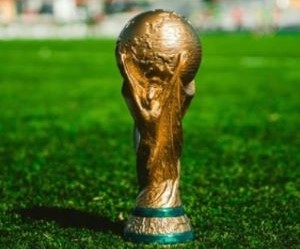

Asia is coming into the 2026 World Cup strong with more spots and young talent. Who will pull off the upset and make history in North America?
WHO COULD BE THE FINALISTS OF THE 2026 WORLD CUP?
The 2026 World Cup promises to be the most unpredictable tournament in history. With 48 teams and a new format, the fight for glory will be more open than ever. However, some teams are already considered favorites, others are seeking revenge, and some could surprise the world. In this article, we review who the potential finalists of the 2026 World Cup might be, with arguments, statistics, and a touch of football passion.


The Historical Favorites: Powerhouses That Never Fail
There are teams that, regardless of the era, always appear in the decisive stages. Brazil, Argentina, France, and England form the group of national teams that could once again fight for the 2026 World Cup final. With squads full of stars, a history of champions, and consolidated projects, these powerhouses are the benchmark to follow.
Brazil: The Eternal Contender
The "Canarinha" never tires of dreaming of its sixth title. After a disappointing 2022 World Cup, Brazil arrives in 2026 with a mix of youth and pure talent. Endrick, Vinícius Jr. and Rodrygo are the attacking trident of the future, supported by Casemiro and Marquinhos as pillars of experience. The team has everything it needs to recapture the brilliance that characterized it for decades. Brazil has reached the final in 7 of the 22 World Cups played, winning 5. Since 1970, no country has won more World Cup matches than Brazil. They average 2.1 goals per game in World Cups. Argentina: the defending champion. La Caleta will seek to retain their crown in 2026. With Lionel Messi likely in his last World Cup and a new generation led by Julián Álvarez, Enzo Fernández, and Alejandro. Garnacho, Argentina combines experience, hunger, and team spirit. Furthermore, their defensive solidity has been one of the key factors since Qatar 2022. Argentina has played in six World Cup finals (1978, 1986, 1990, 2014, 2022, and now aiming for more), winning three. In the last ten years, they have demonstrated impressive consistency: three major titles (Copa América 2021, Finalissima 2022, World Cup 2022) and a united generation behind their captain. France: the European giant of the 21st century. France is, without a doubt, the most balanced and deep team on the planet. Runner-up in 2022, champion in 2018 and finalist in 2006, his performance in recent decades is brutal. With Kylian Mbappé as the undisputed leader, supported by Tchouaméni, Camavinga, and Upamecano, the "Bleus" maintain a squad that combines young talent with elite experience. France has played in four World Cup finals since 1998, winning two (1998 and 2018). They have averaged 2.4 goals per game in the last two World Cups. Mbappé already has 12 World Cup goals at 26 years old, on track to break the all-time record. England: the eternal promise that wants to awaken. England has been flirting with glory for years, but always falls just short. In 2018 they reached the semifinals and in 2022 they lost to France in a very close match. With a golden generation—Jude Bellingham, Bukayo Saka, Phil Foden, and Harry Kane—the English have the talent and maturity to take the final step. The English national team hasn't won a World Cup since 1966, but the statistics back them up: in the last two major tournaments (Euro 2020 and the 2022 World Cup) they reached the top four, and their attack has averaged more than two goals per game. If they adjust their mindset, they could play in a final again after six decades.

Serious contenders seeking their crowning achievement
Beyond the traditional powerhouses, there are teams arriving at the 2026 World Cup with mature squads and solid projects. Portugal, Spain, the Netherlands, and Germany are clear examples of teams that could surprise and reach the final, depending on the draw and their current form.
Portugal: the generation that combines experience and youth
Portugal is experiencing a golden moment. Although Cristiano Ronaldo is probably no longer the star, the team boasts figures like Bruno Fernandes, Bernardo Silva, João Félix, and Rafael Leão. Under Roberto Martínez's leadership, the Portuguese team is seeking a balance between its enormous attacking talent and an increasingly reliable defense. In the qualifiers, Portugal displayed a dominant performance, winning all its matches and averaging 3 goals per game. If they maintain this level, they could reach their first World Cup final in history. Spain: The Rebirth of La Furia Roja. Spain is undergoing a promising generational transition. Euro 2024 was a turning point, with youngsters like Pedri, Gavi, Lamine Yamal, and Nico Williams establishing themselves as global stars. Their style of play remains possession-based, but more vertical and direct than in their golden era (2008-2012).
Spain has 1 World Cup title (2010) and has been a semi-finalist in 1950 and 2022.
In their last 20 matches, they average 68% possession.
They have kept a clean sheet in 60% of their official matches since 2022.
Netherlands and Germany: the classics return
The Netherlands has been three times World Cup runner-up (1974, 1978, 2010). Always competitive, their current defense with Virgil van Dijk and Matthijs de Ligt remains elite, while Cody Gakpo and Xavi Simons provide a touch of attacking freshness. If they can achieve greater consistency, they can go very far.
Germany, meanwhile, is undergoing a rebuilding process after recent failures. But with Jamal Musiala, Florian Wirtz, and Kai Havertz, the "Mannschaft" could be reborn just in time. Let's not forget that Germany is the most successful country in Europe in World Cups: 4 titles and 8 finals played. Ignoring them would be a mistake.

Potential Surprises of the 2026 World Cup
The new World Cup format opens the door to surprises. Emerging teams like Morocco, Croatia, Japan, or the United States could sneak into the top four. We already saw it in Qatar 2022: the gap between powerhouses and outsiders narrowed like never before.
Morocco: The New African Benchmark
After their historic semifinal in 2022, Morocco wants to prove it wasn't a fluke. With Hakimi, Ziyech, and En-Nesyri leading a talented and disciplined generation, the Atlas Lions are the epitome of organization and grit that characterizes the new African football. Their strength lies in their defense: they conceded the fewest goals at Qatar 2022. If they can maintain that solid foundation, they could once again contend for a place in the final. Croatia and Japan: consistency and growth. Croatia has already proven that miracles do happen… twice in a row. A finalist in 2018 and a semifinalist in 2022, their formula is based on experience, mentality, and tactical training. Although Modrić and Perišić might not be available, the generational shift (Gvardiol, Majer, Sucic) guarantees competitive continuity. Japan, meanwhile, has gone from being a surprise to a reality. In the 2022 World Cup, they eliminated Germany and Spain, displaying fast, disciplined, and tactically impeccable football. If they continue their progression, they could make the leap to a semifinal or even an unexpected final. The United States: the ambitious host. As the host country, the United States will have a key advantage: playing at home. With a young and competitive generation (Pulisic, McKennie, Reyna, Adams), the Americans are building a team capable of competing with the best. Their minimum goal is to reach the quarterfinals, but with the support of the public, who knows…
The United States has participated in 11 World Cups.
Their best result was in 1930 (semifinals).
MLS has grown 300% in viewership since 2014, boosting local development.
Predictions and probable scenarios
If the 2026 World Cup were played today, the most likely semifinals, according to performance analysis models (Opta and FIFA Data), would be:
Argentina vs France (possible 2022 rematch).
Brazil vs England (clash of modern powers).
And if we're talking about predictions, the most dreamed-of match for fans would be an Argentina vs Brazil final on American soil: the all-time classic, but in a new setting. However, France and Portugal also have strong arguments to sneak into that fight.
Conclusion
The 2026 World Cup will be a beautiful chaos: more teams, more goals, and more surprises. The historical powers remain favorites, but the new generation of national teams is ready to challenge the established order. Between Mbappé, Vinícius, Haaland, Messi, Bellingham, and Garnacho, talent is guaranteed. Who will be the finalists? It's impossible to know, but if history has taught us anything, it's that football always has room for the epic. And in 2026, with the entire continent buzzing, the final could be the most exciting of all time.
YOU MAY ALSO BE INTERESTED