

Discover everything you need to know to travel to the 2026 World Cup from Latin America: flights, visas, costs, venues and tips to experience it without stress.
WHAT WILL BE THE LEGACY OF THE 2026 WORLD CUP TOWARDS 2030?
The 2026 World Cup will not only be a tournament with more goals, more teams, and more stadiums: it will be the starting point for a new era of global football, leading up to the highly anticipated centenary of the World Cup in 2030. What legacy will it leave? What structures, trends, and changes will it instill in the game, the fans, and the football industry? In this article, we take you into the immediate future with hard data, interesting facts, and a clear vision of the impact this mega-event will have.


Structural Changes That Will Mark an Era
The 2026 World Cup will be the first with 48 teams, 104 matches, and three host countries. This new format comes with challenges, but also with promises of transformation for the beautiful game. From logistics to tactical planning, everything will change after this tournament.
Key Aspects of the New Model
Group Format: 12 groups of 4 teams, with the best third-placed teams qualifying. More matches, more surprises.
Rotation of Host Cities: 16 host cities across Canada, the USA, and Mexico.
More debuting teams: what football growth means in Africa, Asia, and Concacaf.
New rules in testing: FIFA plans to apply artificial intelligence tools for offside and more accurate VAR.
Boosting infrastructure in non-traditional areas.
All this sets the stage for the 2030 World Cup to inherit a more globalized, digitized, and competitive football landscape. 2026 will be the laboratory that feeds the tournament's centenary with technology, inclusion, and massive spectacle.

Economic, cultural, and social legacy
Football isn't just played on the pitch. It also moves through the streets, businesses, and social media. The 2026 World Cup will generate a massive impact that goes far beyond the 90 minutes. Its influence will be felt until 2030 and beyond, changing global football culture.
Visible effects towards 2030
Record-breaking sports tourism: expected to exceed 10 million total visitors by 2026.
Million-dollar investments in stadiums and digital connectivity (5G, augmented reality, immersive experiences).
Greater female participation at all levels of football, from players to referees and commentators.
Normalization of virtual fandom: fans experiencing the World Cup from digital platforms with access In addition, this World Cup will accelerate cultural integration between countries, promoting new narratives: players with dual nationality, multicultural teams, and a more diverse fanbase. All of this will be fundamental to building a more inclusive and pluralistic 2030.
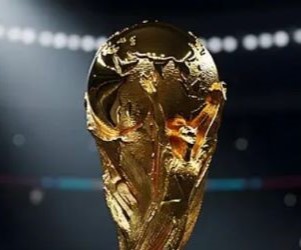
The springboard to the 2030 centenary
The 2026 World Cup will be the stepping stone to the celebration of the 100th anniversary of the first World Cup in 1930. Already confirmed with matches in Uruguay, Argentina, Paraguay, Spain, Morocco and Portugal, 2030 promises to be an unprecedented event. What will 2026 bring to this historic celebration?
A bridge between the modern and the historical
It will be the first World Cup with a post-Messi and Cristiano generation in full prominence.
It will allow the identification of young stars who will be icons in 2030: Endrick, Musiala, Garnacho, Gavi, among others.
It will establish new digital narratives that will be strongly consolidated during the centenary.
It will define new business models: NFTs, personalized broadcasts, and interactive experiences for global fans.
YOU MAY ALSO BE INTERESTED
