

WHAT IS THE NEW FORMAT FOR THE 2026 WORLD CUP?
The 2026 World Cup will mark a turning point in football history. For the first time, 48 teams will compete in the tournament, leaving behind the classic 32-team format. In this article, we explain how this new structure will work, how many groups there will be, how teams qualify, how many matches will be played, and what players and experts think about this change. If you're passionate about football, get ready for a bigger, more intense, and more surprising World Cup.


From 32 to 48 teams: the historic change
Since France 1998, the World Cup has been played with 32 teams, divided into 8 groups of 4. But that's over. In 2026, the tournament will grow to 48 teams, a decision FIFA made seeking to make football more global, more inclusive, and, of course, more profitable.
This new format will allow more countries to participate for the first time. Africa will increase from 5 to 9 slots, Asia from 4.5 to 8, CONCACAF will have 6 (including the hosts), and CONMEBOL will rise from 4.5 to 6. Europe will maintain its dominance with 16 slots.
Advantages for global football
More debutant teams and greater global representation.
New stories and surprises like Morocco's in 2022.
Greater visibility for historically excluded regions.
Increased revenue for smaller federations.
Commercial and audience interest in new markets.
Fun fact: with this new format, more than 200 qualifying matches will be played in the 4 years prior, moving millions of dollars and generating non-stop content on social media.
The idea is clear: more countries = more excitement = more football for everyone. Although not everyone is convinced, the ball has already started rolling towards the future.

New Group Format and Qualification
One of the dilemmas after increasing to 48 teams was: how do we organize the tournament? Initially, FIFA proposed 16 groups of 3 teams, but there were concerns that the final matches would be uncompetitive. Finally, in March 2023, a better option was approved: 12 groups of 4 teams each.
This way, each team will play at least 3 matches in the group stage.
The top two teams from each group (24 teams) plus the eight best third-placed teams will qualify, for a total of 32 teams in the knockout stage.
This is how the complete system will work
Group stage: 12 groups of 4 teams (48 in total).
32 teams advance: first, second, and best third-placed teams.
Knockout stages: Round of 32, Round of 16, Quarter-finals, Semi-finals, and Final.
104 matches in total (previously 64).
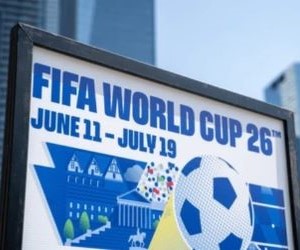
Estimated duration: 39 days tournament.
This new system will allow for more unexpected matchups and more knockout games, something fans love. The excitement of the round of 16 now starts in the round of 32. One wrong step and you're out.
Tactician's tip: with more matches and more wear and tear, squad rotation will be key. Managers will have to be more strategic than ever.
Will it be longer? Yes. More complex? Also yes. But more World Cups are always better, right?
Opinions, reactions, and what's next
The format change has generated all sorts of reactions in the world of football. For some, it's a great opportunity for growth; for others, quality is sacrificed for quantity. But what is clear is that the 2026 World Cup will be unlike anything seen before.
What are the voices of football saying?
Arsène Wenger (FIFA): “It will be fairer and more competitive, there will be more opportunities for everyone.”
Toni Kroos: “48 teams seems like too many to me. Not everyone is at that level.”
African and Asian fans are enthusiastically celebrating the extra spots.
European media criticize the saturation of matches.
Brands and sponsors see it as a goldmine for new markets.
According to Nielsen, the 2026 World Cup could break audience records: more than 6 billion cumulative views are projected, with TikTok, YouTube, and Instagram dominating the consumption of highlights.
In addition, FIFA estimates revenues of more than 11 billion dollars, thanks to the increased number of matches, television rights, and new venues.
The key will be how it's experienced. It will be a more democratic, more digital, and more connected World Cup. A tournament designed for a new generation of fans.
And like any change, it has its risks... but also its magic. Because in the end, what matters is the game, the passion, and the roar of a goal. And the 2026 World Cup will be full of that.
