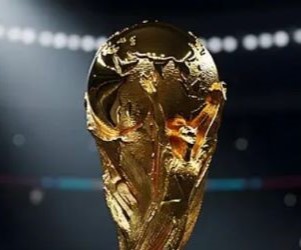

HOW MUCH REVENUE WILL THE 2026 WORLD CUP GENERATE?
The 2026 World Cup is poised to shatter all financial records in football history. With three host countries, more matches, and a global audience more connected than ever, FIFA and the organizers are projecting a game-changing revenue surge. This article explores the projected figures, the most lucrative revenue streams, and some mind-blowing facts. Can you imagine how much a single broadcasting rights costs or how many official jerseys will be sold? Sit back and prepare to be amazed.


2026 World Cup Revenue Projections
The 2026 World Cup will not only be the biggest in terms of teams and matches, but also the most lucrative. According to official FIFA projections, the tournament is expected to generate more than $11 billion in revenue, a figure that crushes the $7.5 billion raised at Qatar 2022. This exponential leap is mainly due to: Expanded format: 48 teams instead of 32 means more matches, more tickets sold, and more media exposure. Three host countries: The United States, Mexico, and Canada guarantee larger markets, better infrastructure, and greater advertising rights. Increased commercial demand: More than 5.5 million tickets are expected to be sold, along with significant television reach. which will surpass 5 billion cumulative viewers.
Explosion of sponsors: Global and regional brands are willing to pay record sums to appear at this event.
Merchandising: Sales of official products are projected to exceed $2 billion.
Comparison with previous editions
To put it in context, the 2014 World Cup in Brazil generated $4.8 billion, Russia 2018 reached $6.1 billion, and Qatar 2022 reached $7.5 billion. The difference is staggering, and all indications are that the growth will be sustainable, thanks to new broadcasting technologies, more modern stadiums, and hyper-segmented marketing strategies. If FIFA meets its $11 billion estimate, we'd be talking about an increase of more than 45% compared to the last World Cup. A crazy figure worthy of financial VAR!

Main Sources of Revenue
The business of global football isn't just about the ball. In fact, the real figures are moved behind the scenes. Here we explain where the millions that FIFA and its partners will pocket in 2026 will come from.
1. Broadcasting Rights
This is the crown jewel. It is estimated that more than 50% of the revenue will come from the sale of television rights. By 2026, networks such as FOX Sports, Televisa, BBC, and other media giants have already secured their licenses for astronomical sums. In the US alone, FOX paid over $400 million for the rights. 2. Sponsorships Companies like Coca-Cola, Adidas, Visa, Hyundai, and Qatar Airways are long-standing sponsors. In 2026, new tech and cryptocurrency giants are expected to enter the fray. In total, the sponsorship package could represent close to $2.6 billion. 3. Ticketing and Hospitality With an estimated 104 matches, over 5.5 million tickets are projected to be sold. In the US alone, sellouts are expected in stadiums with a capacity of over 70,000 spectators. VIP experiences and hospitality packages could exceed $1 billion. 4. Merchandising: Jerseys, caps, official balls, collectible figures, and more. World Cup merchandising is a goldmine. Adidas has already finalized the designs for the official balls, and forecasts point to more than 200 million units sold globally.
More than 60% of sales will be online.
Special editions sold out in minutes.
Collaborations with artists and influencers.
NFTs and digital collectibles booming.
Premium packs for collectors.
In short, every goal, every penalty, and every corner kick will be part of a gigantic economic machine that moves millions per second.

Surprising figures and curious facts
Beyond the big money, the 2026 World Cup is packed with figures that will blow your mind. Here's a compilation of facts that show the true magnitude of this unprecedented event.
Did you know...?
The 2026 World Cup will have the longest schedule in history, with almost 40 days of matches.
More than 16 venues in 3 countries will be used, from Toronto to Mexico City, passing through New York and Miami.
FIFA will install more than 1,000 kilometers of fiber optic cable just to guarantee quality in the broadcasts.
An economic impact of more than $5 billion is expected in tourism alone. North America.
The official ball will include internal sensor technology to assist VAR with pinpoint accuracy.
The Dark Side of Success
There are also critical voices. There is talk of an increase in logistical costs due to having venues so far apart. Furthermore, the tournament's carbon footprint worries environmentalists, although FIFA promises offsets and sustainable plans.
That said, for the average fan, what matters is experiencing the greatest football party. With or without controversy, the 2026 World Cup will be an economic, sporting, and cultural phenomenon. Get ready to see goals, tears, celebrations, and also numbers more dizzying than a penalty shootout. And let the money flow!