

Speed, precision, and goals: the 2026 World Cup already has teams that excel on the counter-attack. We tell you who has mastered the art of the counter-attack.
WHO WERE THE PREVIOUS WORLD CHAMPIONS?
For nearly a century, the World Cup has crowned national teams that made history with their talent, strategy, and heart. Uruguay, Brazil, Germany, Argentina, Italy, France, England, and Spain are the only countries to have lifted the most coveted trophy on the planet. Behind every star embroidered on their jerseys are stories of feats, tears, immortal goals, and legends that inspired the entire world. In this article, we'll take a journey through all the World Cup champions, from 1930 to 2022, with interesting facts, statistics, and iconic moments that define why football is so much more than just a sport.


The Birth of World Cup Glory
The World Cup was born in 1930 in Uruguay, and since then it has been the stage where the dreams of millions come to life. The first editions laid the foundations for the tournament that today stirs passions across the globe. Between 1930 and 1958, the protagonists were Uruguay, Italy, and Brazil, who began to write the legend of world football.
Uruguay: The First World Champion (1930)
On July 30, 1930, in Montevideo, Uruguay defeated Argentina 4-2 before more than 90,000 people. It was the first World Cup in history and the birth of the "Celeste" myth. Interestingly, Uruguay had already won Olympic gold in 1924 and 1928, thus consolidating their footballing dominance. The Jules Rimet trophy stayed home, and the cry of “World Champions!” was born. Italy: The two-time champion that defied history (1934 and 1938) Italy became the first team to win two consecutive World Cups, under the leadership of Vittorio Pozzo. In 1934, they beat Czechoslovakia 2-1 in Rome, and four years later, they defeated Hungary 4-2 in Paris. It was an era marked by politics and propaganda, but also by the talent of players like Giuseppe Meazza, whose name is now borne by the legendary Milan stadium. After the pause of World War II and the return of global football, Brazil shone in Sweden in 1958. It was the World Cup where a 17-year-old named Edson Arantes do Nascimento—Pelé—made his debut, dazzling the world with his talent. Brazil defeated the hosts 5-2 and won their first star. The “beautiful game” was born.
Uruguay (1930, 1950): 2 titles.
Italy (1934, 1938): 2 titles.
Brazil (1958): its first crown.
These first champions shaped the DNA of world football: passion, technique, and love for the shirt.

From Pelé to Maradona: Football as Art
From the 1960s to the 1990s, football experienced a golden age. Brazil dominated the world, Germany and Argentina emerged as powerhouses, and Italy shone once again. It was the era that gave birth to eternal icons: Pelé, Beckenbauer, Maradona, Zico, and Romário, among others.
Brazil: The King of the World Cups (1962, 1970, 1994)
Brazil won three World Cups between 1962 and 1994, cementing its status as an absolute powerhouse. In Chile in 1962, they repeated their title with Garrincha as their star player; in Mexico in 1970, they amazed the world with Pelé, Jairzinho, and Tostão, the so-called "best team of all time." And in the United States in 1994, under the leadership of Romário and Bebeto, they lifted their fourth cup after defeating Italy on penalties. Germany: The Unstoppable Machine (1954, 1974, 1990) Germany (then West Germany) showed the world what discipline and tactics could achieve. In 1954, they staged the "Miracle of Bern" by defeating the powerful Hungary. In 1974, with Beckenbauer and Gerd Müller, they defeated the Netherlands and their "Total Football." And in 1990, Lothar Matthäus guided his country to a third consecutive title in Italy, defeating Argentina in a tense final.
Argentina: The Magic of Maradona (1978, 1986)
Argentina won its first title on home soil in 1978, with Mario Kempes as top scorer. But its most legendary moment came at Mexico 1986, when Diego Armando Maradona led the Albiceleste with immortal performances. His "Hand of God" and the "Goal of the Century" against England are part of football's DNA.
Brazil: 4 titles (58, 62, 70, 94).
Germany: 3 titles (54, 74, 90).
Argentina: 2 titles (78, 86).
England (1966): their only championship, with Bobby Charlton and the mythical phantom goal at Wembley.
These years defined the identity of modern football: individual talent, collective power, and emotions that transcend generations.
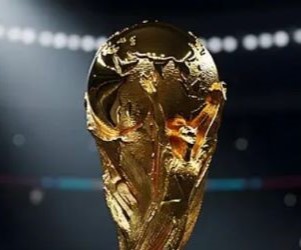
France, Spain, and the New Era of Global Football
Since France 1998, football has become more global and balanced. Europe took control, with champions who combined technique, strategy, and youth. The globalization of the sport allowed new generations to shine on increasingly competitive stages.
France: From Dream Debut to Back-to-Back Titles
France won its first title in 1998 as hosts, led by Zinedine Zidane, who scored two headers in the final against Brazil (3-0). Twenty years later, at Russia 2018, they repeated the feat with a golden generation: Mbappé, Griezmann, and Kanté. With just two titles, France is already one of the most respected modern powers.
Spain: The Touch Made History (2010)
In South Africa 2010, Spain displayed the famous “tiki-taka”, a style based on possession and precision. With Xavi, Iniesta, Casillas and company, La Roja defeated the Netherlands with an unforgettable goal by Iniesta in extra time. It was the culmination of a golden era that also included two European Championships (2008 and 2012). Italy and Germany: the tradition that never dies. Italy won its fourth title in 2006, defeating France in a final remembered for Zidane's header and the penalty shootout. Germany, meanwhile, was crowned champion in Brazil 2014, with Mario Götze's legendary extra-time goal against Argentina. It was his fourth star and a vindication of his offensive style.
France: 2 titles (1998, 2018).
Spain: 1 title (2010).
Italy: 4 titles (1934, 1938, 1982, 2006).
Germany: 4 titles (1954, 1974, 1990, 2014).
Argentina 2022: the return of champion
Argentina: 3 titles (1978, 1986, 2022).
Brazil remains the most successful team with 5 titles.
Between 1998 and 2022, Europe won 4 of the 6 World Cups.
Recent history shows that football has become more balanced: South American technique and European tactics coexist in a global spectacle without borders.
Interesting facts about the champions
YOU MAY ALSO BE INTERESTED
